
Lumbar Belts: Helpful Support or Hidden Risk for Your Back?
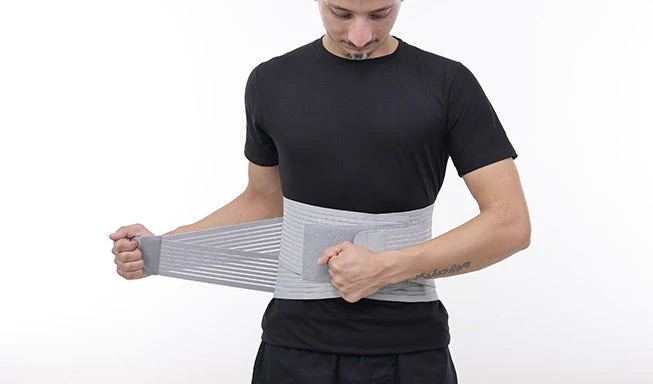
Table of Contents
- Introduction
- What Is a Lumbar Belt?
- Why Do People Feel Better While Wearing a Lumbar Belt?
- Do Lumbar Belts Actually Treat Back Pain?
- Can Wearing a Lumbar Belt for Too Long Make Your Back Weaker?
- The Key Issue Is Dependence
- When Can a Lumbar Belt Be Helpful?
- When Should You Avoid Wearing It All Day?
- Common Mistakes People Make
- What Physiotherapists Recommend Instead
- Why Core Strength Matters More Than External Support
- How to Stop Using a Lumbar Belt Safely
- Lumbar Belt vs Exercise Therapy
- How Physiotherapy Helps Back Pain
- Why Choose My Rehabify?
- Frequently Asked Questions (FAQs)
- Conclusion
Introduction
If you've ever experienced back pain, chances are someone has recommended a lumbar belt. Whether prescribed by a healthcare professional or purchased online, lumbar support belts are commonly used to:
- reduce discomfort
- provide support
- improve confidence during movement
- assist during recovery from certain back conditions
Many people feel immediate relief when wearing a lumbar belt.
This often leads to an important question:
"If the belt helps my back feel better, should I wear it all the time?"
While lumbar belts can be beneficial in certain situations, prolonged and unnecessary use may create new problems over time.
In this article, we'll discuss when lumbar belts are useful, whether they can weaken your back, and how to use them safely.
What Is a Lumbar Belt?
A lumbar belt, also called a lumbar corset or lumbosacral belt, is a supportive brace worn around the lower back. Its primary purpose is to provide external support to the lumbar spine.
Lumbar belts are commonly used for:
- acute back pain
- muscle strains
- postural support
- post-surgical recovery
- certain spinal conditions
- physically demanding activities
They are designed to help reduce excessive movement and provide a feeling of stability.
Why Do People Feel Better While Wearing a Lumbar Belt?
Many individuals report immediate comfort after putting on a lumbar belt.
This may happen because the belt:
- provides external support
- increases body awareness
- encourages better posture
- limits certain painful movements
- creates a sense of security
However, feeling better while wearing the belt does not necessarily mean the underlying issue has been resolved.
Do Lumbar Belts Actually Treat Back Pain?
Not directly.
A lumbar belt may help manage symptoms, but it does not address the root cause of back pain.
For example, if back pain is related to:
- weak core muscles
- poor posture
- reduced mobility
- muscle imbalances
- prolonged sitting
The belt alone will not correct these issues.
It acts as a supportive tool rather than a permanent solution.
Can Wearing a Lumbar Belt for too Long Make Your Back Weaker?
Potentially, yes.
This is one of the biggest concerns physiotherapists have regarding long-term belt use.
Your spine is naturally supported by:
- core muscles
- back muscles
- abdominal muscles
- pelvic stabilizers
These muscles work together to provide stability and control during movement.
If a lumbar belt is used continuously for extended periods without exercise and rehabilitation, the body may begin relying more on the belt and less on its own muscular support system.
Over time, this may contribute to:
- reduced muscle activity
- decreased strength
- reduced endurance
- dependence on external support
This does not happen overnight, but prolonged reliance may become problematic.
The Key Issue Is Dependence
The goal of a lumbar belt should be temporary support.
The problem occurs when individuals become afraid to move without it.
Common statements include:
- "I can't sit without my belt."
- "My back feels weak without it."
- "I wear it all day because I'm afraid the pain will return."
In many cases, this reflects dependency rather than actual physical need.
The body should gradually regain confidence and strength through rehabilitation.
When Can a Lumbar Belt Be Helpful?
There are situations where lumbar belts may be beneficial.
These include:
- acute episodes of back pain
- short-term support during recovery
- certain post-surgical conditions
- physically demanding activities
- temporary protection during flare-ups
When used appropriately, a lumbar belt can be a useful part of a treatment plan.
When Should You Avoid Wearing It All Day?
Continuous use may not be ideal if:
- pain has significantly improved
- normal activities can be performed comfortably
- no professional has advised ongoing use
- exercise therapy has been neglected
The goal should always be to restore the body's natural support system.
Common Mistakes People Make
Wearing the Belt All Day
Many individuals continue wearing the belt long after it is needed, believing that constant support will speed up recovery or prevent pain from returning. While a lumbar belt can provide temporary relief and stability, prolonged use may reduce the natural workload of the muscles that support the spine.
Over time, relying too heavily on external support can lead to decreased muscle engagement and reduced confidence in normal movement. It is important to follow your healthcare provider’s recommendations regarding when and how long to wear the belt.
Avoiding Exercise
A belt should complement rehabilitation, not replace it.
One of the most common mistakes is assuming that wearing a lumbar belt alone is enough to manage back pain. In reality, strengthening exercises, mobility work, and posture correction are often essential components of long-term recovery.
Exercise helps improve spinal stability, muscle strength, flexibility, and overall function. Without addressing these factors, symptoms may return once the belt is removed. A structured rehabilitation program can help restore movement and reduce the likelihood of recurring pain.
Assuming the Belt Fixes the Problem
The belt may reduce symptoms but often does not address the underlying cause.
Back pain can result from a variety of factors, including muscle weakness, poor posture, movement dysfunction, repetitive strain, or underlying medical conditions. While a lumbar belt may provide temporary comfort and support, it is not a cure for these issues.
Relying solely on the belt without identifying and addressing the root cause may delay proper treatment and recovery. A comprehensive assessment can help determine why the pain developed and what steps are needed for lasting improvement.
Becoming Fearful of Movement
Avoiding movement may contribute to stiffness and weakness over time.
Some people become overly dependent on their lumbar belt and begin to worry that normal activities will worsen their condition without it. This fear can lead to reduced physical activity, which may negatively affect strength, flexibility, and overall function.
In many cases, gradual and guided movement is an important part of recovery. Learning how to move safely and confidently can help reduce fear, improve physical capacity, and support long-term spinal health. Working with a physiotherapist can help you regain confidence in movement while minimizing the risk of aggravating symptoms.
Stay Physically Active
Regular movement supports better posture and overall spinal health.
What Physiotherapists Recommend Instead
Most physiotherapists view lumbar belts as temporary aids.
Long-term improvement usually comes from:
- exercise therapy
- core strengthening
- posture correction
- mobility exercises
- movement training
These interventions help improve the body's ability to support itself naturally.
Why Core Strength Matters More Than External Support
Your core functions like a natural back brace.
Strong core muscles help:
- stabilize the spine
- improve posture
- reduce excessive stress on the back
- improve movement efficiency
Unlike a lumbar belt, strong muscles provide support 24 hours a day.
This is why strengthening remains one of the most important components of back pain rehabilitation.
How to Stop Using a Lumbar Belt Safely
If your symptoms have improved, the belt should usually be reduced gradually rather than stopped suddenly.
A physiotherapist may recommend:
- wearing it only during specific activities
- reducing daily wear time
- increasing exercise participation
- improving core strength
- practicing movement without dependence on the belt
The transition should be individualized based on symptoms and function.
Lumbar Belt vs Exercise Therapy
A lumbar belt provides external support by limiting excessive movement and offering temporary stability to the lower back. It can be useful during certain activities or in the early stages of recovery when pain makes movement difficult.
Exercise therapy, on the other hand, improves internal support by strengthening the muscles that naturally stabilize the spine. These include the core muscles, lower back muscles, pelvic muscles, and hip muscles, all of which work together to maintain proper posture and spinal alignment.
While a belt may help reduce discomfort temporarily, it does not train these muscles to function better. Exercise therapy helps improve strength, stability, balance, and movement control, allowing the spine to handle daily activities more efficiently and with less strain.
For long-term back health, building a strong and stable core through a structured exercise program remains the more effective and sustainable solution.
How Physiotherapy Helps Back Pain
Physiotherapy focuses on identifying the factors contributing to back pain.
Treatment may include:
- posture assessment
- exercise therapy
- mobility training
- core strengthening
- ergonomic advice
- movement correction
The goal is to reduce pain while restoring strength and confidence in movement.
Why Choose My Rehabify?
At My Rehabify, we believe that lasting recovery comes from empowering the body rather than creating dependence on external support.
Our rehabilitation programs focus on:
- posture correction
- exercise therapy
- core strengthening
- mobility training
- movement education
- personalized treatment plans
We help individuals build the strength and confidence needed to move comfortably without relying unnecessarily on belts or braces.
Frequently Asked Questions
Can a lumbar belt weaken my back muscles?
Prolonged over-reliance on a lumbar belt may reduce muscle activity and contribute to weakness over time.
Is it okay to wear a lumbar belt every day?
Daily use may be appropriate in some situations, but long-term continuous use should be guided by a healthcare professional.
How long should I wear a lumbar belt?
The duration depends on the condition being treated. Lumbar belts are generally intended for temporary support rather than permanent use.
Should I exercise while wearing a lumbar belt?
Exercise recommendations vary depending on the condition. A physiotherapist can guide you on appropriate activity levels.
Is a lumbar belt better than physiotherapy?
A lumbar belt may provide temporary relief, but physiotherapy addresses the underlying causes of back pain and supports long-term recovery.
Conclusion
Lumbar belts can be valuable tools when used appropriately.
They may provide temporary support, improve confidence, and help manage symptoms during certain stages of recovery.
However, wearing a lumbar belt for too long without addressing the underlying causes of back pain may contribute to dependence and reduced muscle function over time.
The ultimate goal should always be to build a stronger, more resilient back through movement, exercise therapy, and rehabilitation.
At Rehabify, we help individuals recover from back pain through personalized physiotherapy programs designed to restore strength, improve mobility, and support long-term spinal health.

About the Author - Dr. Priya Gaur
Physiotherapist at My Rehabify
Dr. Priya Gaur (PT), MPT – Orthopaedics is the Founder and Chief Physiotherapist at My Rehabify Physiotherapy, Delhi. With 7+ years of clinical experience, she specializes in orthopedic, sports injury, neurological, and post-operative rehabilitation. This article is based on evidence-based physiotherapy practices and her extensive clinical expertise to provide accurate, reliable, and patient-focused health information.